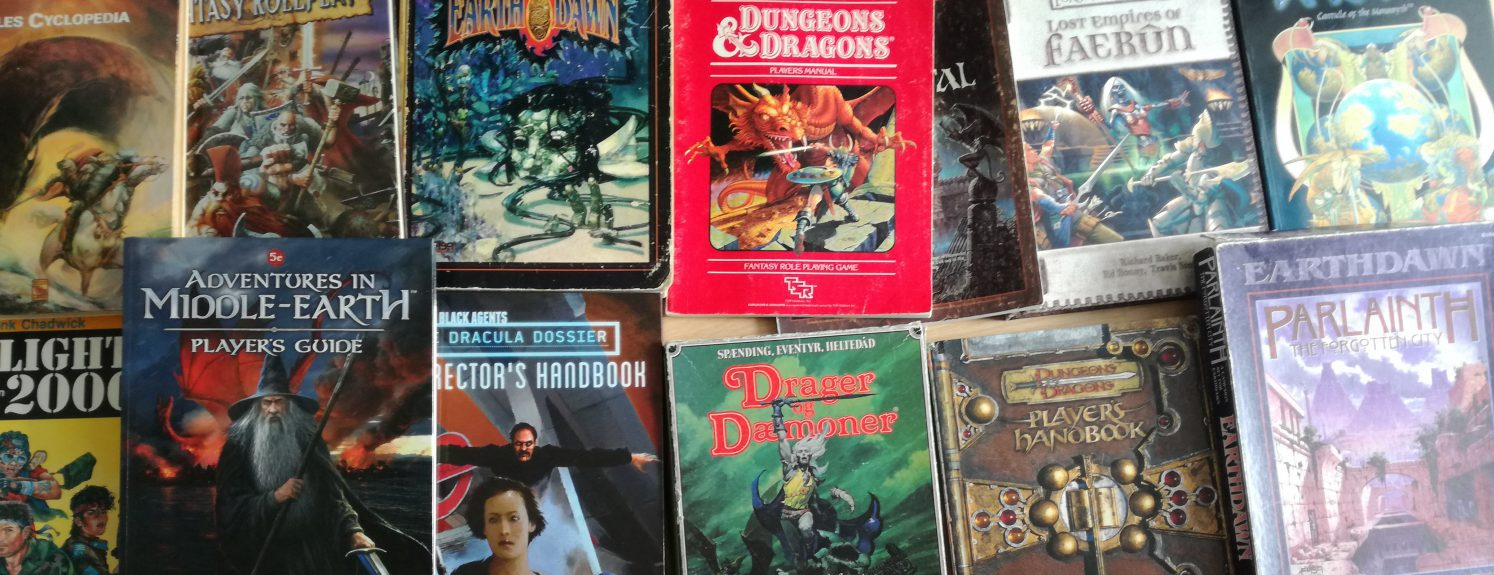
Books that inspired my campaigns (part 1)

My friend, and sometimes Game Master, Johannes, described some of the books that inspire him as a GM on his blog Sort Forsyning top 13 books (it’s in Danish). That in turn inspired me to share some of the books that I find are great inspiration for role-playing games. I think it will be a (current) top ten. I hope you get inspired too!

Malazan Book of the Fallen
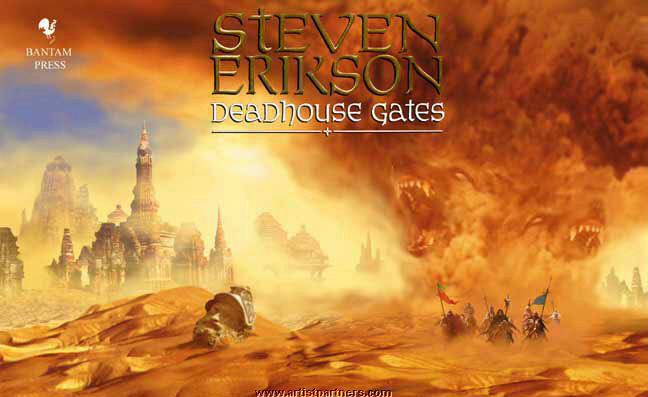
deadhousegatesstoneerikson

These 10 books have so many cool ideas that it is mind boggling. It shows in the stories that the author has a background in anthropology and archaeology, as cultures and lands have layers upon layers of history, with different technology levels and magic. The world building was very interesting to me. It is very far from the traditional Gary Gygax medieval knights world.

I love them, but the books aren’t equally great, and were hard to read as they came out, as the amount of people and plot lines you have to keep track of is staggering. That said, I’ve lifted a number of ideas from these books straight into my current D&D campaign. I also wanted to replicate the magic system, where each “school of magic” (sort of) is drawn from a particular plane. But it was too much work for D&D spells and planes are so heavily integrated into the rules.

It is also dark, gritty and funny. The second book, Dead House Gates, and its story of the Chain of Dogs, remains the most riveting and gut wrenching fantasy story I’ve read.

Duiker was well past astonishment at anything he saw. Like the Tithansi tribesmen he’d occasionally exchanged words with, he’d begun to believe that Coltaine was something other than human, that he had carved his soldiers into unyielding avatars of the impossible. Yet for all that, there was no hope of victory. 
(Deadhouse Gates)

Sharpe
Bernard Cornwell has written 21 novels with the hard as nails British soldier Sharpe, who has his career during the Napoleonic Wars – mainly in the Peninsular Wars under Wellington. They are great adventures, full of good plot ideas, and they were the main inspiration for my Warhammer campaign. Cornwell’s insight, that to make the story interesting, he had to make enemies and obstacles on Sharpe’s own side just as big a feature as the enemy, is something I used. I alsoRifles drew a lot of inspiration for the military campaign side of things, with the size of the army train, the unwieldiness of the artillery and the chaos and confusion of battle that Cornwell describes so well. Being part of a military organization is obviously also a powerful motivator for going on ‘missions’. Cornwell writes great action, and there are a lot of skirmish battles with company sized units, that I also drew upon for my campaign.
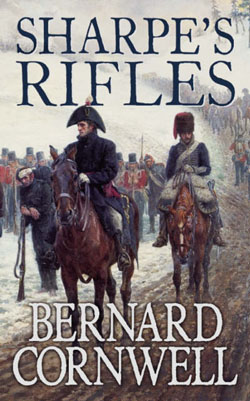
“Powder smoke spurted from the orchard, showing that Dragoons [no, not dragons!] barred that escape, yet it was his only hope. He shouted up the ladder. ‘Come down!’ He turned to Harper. ‘We’ll take the Spaniards with us. We are breaking southwards.
‘They’ll catch us.’
‘Better that than dying like rats in a pit. Fix swords!’
(Sharpe’s Rifles)
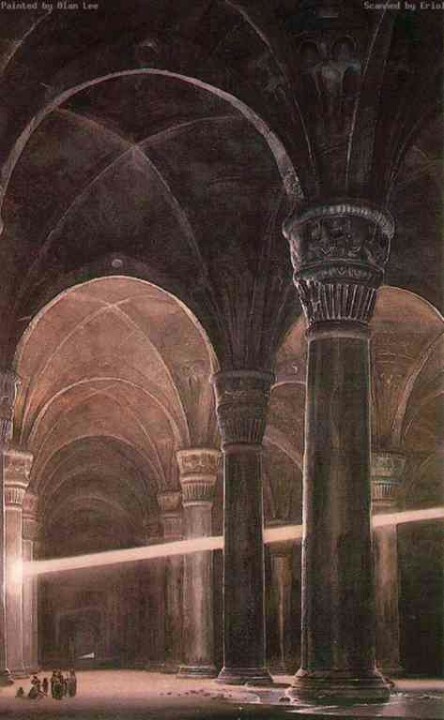
khazad dumLord of the Rings (and Silmarillion)
It needs no introduction. For years it was one of the few fantasy novels available to me, because we had it at home in Danish. When I became better at English as a teenager, they whole fantasy field opened up, and I’m still trying to read through all the Fantasy Masterworks. But Tolkien will always be there, with the magic, orcs and journeys, and I still love ancient dwarf keeps full of secrets, treasure and ancient evil (and so does many of my players!). Don’t think I’ve ever made a fantasy campaign without a lost dwarf keep.

“The orcs have often plundered Moria; there is nothing left in the upper halls. And since the dwarves fled, no one dares seek the shafts and treasuries down in the deep places: they are drowned in water – or in a shadow of fear.
(Gandalf, in the Fellowship of the Ring)

The Fall of the Roman Empire – A New History
This book is fantastic. It really inspires my world-building in many ways. Fundamentally, it provides insight into how that empire was ruled, from a variety of perspectives, including logistically and politically, and how half of it ultimately collapsed. Some of the key points I have taken from it are: rampant corruption, civil war every 20 years, high level of autonomy because of the limits of the administrative system, and the size of armies that could disrupt it -around 10,000 displaced tribal the-fall-of-the-roman-empire-978033049136503warriors settled in the Balkans created a domino effect that contributed heavily to the fall of the Empire.
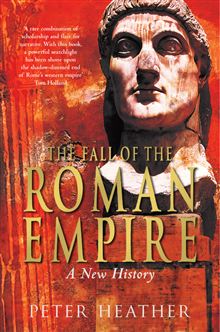
Then there are some practical details around travelling, where I think in most fantasy games the logistics and time involved is underestimated. Theophanes had to travel from Egypt to Antioch (in Turkey). The trip was on great roman public roads, which made it very quick – he travelled 40 kilometres (around 25 miles) per day. With him, he brought a group of slaves, and soldiers for parts of the trip. This meant that the journey lasted almost a month. For his slaves he bought 160 litres of wine for the return journey, and bought two bottles for the same price for himself (obviously a better vintage). As he hardly knew anyone along the way, he also had to bring dozens of valuable gifts for other important Romans that he met.

“Running the Roman Empire with communications then available was akin to running, in the modern day, an entity somewhere between five and ten times the size of the European Union.”
(The Fall of the Roman Empire – A New History)

Undaunted Courage

This is the story of the legendary Meriwether Lewis who, together with William Clark, Sacagaewea and their party, was the first to cross America over land from the Atlantic to the Pacific. It is an adventure of the highest order, and really gave me a lot of inspiration for eUndauntedxploration of the untamed wilderness, and you see how resourceful humans can be. It is a direct inspiration for my current D&D campaign, where the characters help settle a new an unknown land.
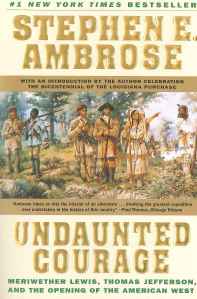
“Together, under the leadership of the captains, they had become family. They could recognize one another at night by a cough, or a gesture; they knew one another’s skills, and weaknesses, and habits, and background: who liked salt, who preferred liver; who shot true, got the cooking fire going quickest; where they came from, what their parents were like, what dreams they had…They would triumph, or die, as one.”
(Undaunted Courage)

In the next part I will be touching upon The Song of Ice and Fire, a book about Africa and a video game, among others.

My Dungeons and Dragons Homebrew 1

I want to provide context for my posts on rules and campaign setting, and I’m writing brief overviews of each session for my players anyway, so I’ve decided to post the chronicles of my campaign on this blog. With my Warhammer campaign coming to a close at around 90 sessions, where I have a few paragraphs on each session, I can see it is also a pretty cool thing to have when looking back at all the great fun we had.

Campaign setup

My campaign is fundamentally an exploration campaign. The realms of the East have been warring for 30 years against a dark empire named the Hrran Hegemony. The war is in a deadlock and the ‘good’ realms need resources, allies or some kind of joker to break the deadlock. Fortunately, the half-elves of the Isles of Finrod have found a new continent across the ocean. The largest human kingdom therefore sets up an outpost and has sent settlers there to establish a new realm, and to explore the lands for riches, magic and potential allies. The characters are among the second group of settlers sent there.

Hoh Rainforest, Olympic National Park, Washington
The land where they settle is covered in deep forest. This is from a Washington state rain forest.

The Group

All members of the adventuring group come from the realms in the East, which have a geography and technology roughly equal to early medieval Europe. They decided at the beginning to form a accredited Adventuring Company, which provides some advantages, but cost them resources.

bagpipe
The dwarf bard use a bagpipe as his instrument. Fun, and great for attracting random encounters!

After 3 sessions the line-up is: 

Sir Jarn Ashford, Human paladin 1/ranger 2

Arak, half-orc fighter 2/war cleric 1

Welk Del’mantanrese, human abjurer 3

Weylyn Cullain, half-elf moon druid 3

Horziver Xalybyr, gnome arcane trickster 3

Abbott, human warlock 3

Korrick the Lorekeeper, dwarf fighter 1/bard 1

The first 3 Sessions:

Session 1:

The members of the adventuring group has various ties to each other, both are mostly not close friends. They embark on their journey at the Isles of Finrod, and sail across the ocean on one of three vessels (of course). After a few weeks they make a stop at Hope’s Pinnacle, which is a lone island with a huge abandoned castle built by giants, where a garrison and port has been built by the good nations. They stay a couple of days before continuing their journey.

Close to land the ships are thrown into a storm and attacked by Kuo-Toa. The party fights them off, but after the storm dies down one of the three ships are missing.

Meta: They drew random questions I had created, which they answered to create more backstory for their characters.

christopher-columbus-ships
The ships of my campaign are similar to the far left ship, however sleeker, with more of a norse longboat element, and more elaborate elven carvings – and no cross on the sails.

Session 2

They arrive at the small settlement, which lies in a cove, next to a river, surrounded by a vast forest, and with a couple of gleaming white towers reaching above the canopy in the distance. They are greeted warmly, and introduced to some of the people living there, including the governor Erin de Vrin. But with a missing ship, the mood has a somber undertone. Next morning, the two adventuring parties available to the settlement are sent out to find the missing ship. The characters are sent north, while their ‘rivals’ are sent south.

The group treks through the forest and at night are assaulted by a Displacer Beast, which they manage to slay. The following day they come upon a group of goblins, throwing stones and taunting a wounded elf captured in one of their pit traps. They drive off the goblins and rescue the elf. The elf has tattooed camouflage on his skin and he almost only use sign language.

Session 3:

With some difficulty the druid Weylyn begins to communicate in the elven tongue with the tattooed barbarian, and recognizes that he speaks some kind of dialect of the elven language. They learn that a big winged beast roams to the north, and that he finds it very important to stay hidden. The next morning the elf has sneaked out of the camp.

Using the wizard’s seagull familiar, they do spot the winged creature, which turns out to be a wyvern, and see its nest in a ruined tower. They decide to explore the tower while the wyvern is hunting at dusk. At the top of the tower in the nest of flotsam and bones, they find a couple of scrolls and a kuo-toa body. Welk and Horziver figure out how to destabilize the nest, and make a plan for attacking the wyvern when it lands, and hopefully drop to the bottom of the ruined tower. The plan succeeds and the party manages to overcome the wyvern without getting hit.

At night, the carrion crawler that had hidden in the tower came out to feast on the wyvern. It was discovered, and the group killed it.

Trekking further north they finally come upon a cove, where the lost ship is stuck on a reef. The cliffsides have many cave entrances, and they begin to explore. They find a body of a sailor, after chasing away two giant crabs, and in one of the caves they are attacked by many crabs, but rescue an exhausted guard from the ship, who hid in the cave.

They bring her back to their camp, to give her rest and hear her story. At night kuo-toa emerges at high tide from one of caves and sacrifice a human to some kind of snake creature that emerges from the sea.

Meta and Mechanics note:

Fighting the wyvern, the damage output of 6 players was very high, with above average rolls, and it was a short

The Wyvern monster manual illustration from 3rd edition of D&D by the way.

encounter. But the danger of getting hit by the poison stinger of the wyvern made it a tense encounter. It certainly displays the weakness in D&D 5th if you have large groups against single enemies. However, in this case, a hit by the wyvern on almost anyone of the 2nd level characters would either drop or kill them. I think it was fun, and when the PC’s dare something dangerous, the player’s feel great when they succeed.

Weapon materials in D&D 5ed

I am trying to avoid adding complexity and sub-systems to my game, but for my campaign world to be thematically coherent I did decide to make a system for weapon materials, so there is a difference between bronze and steel. As the group is in  a remote land, as part of the first settlement in this “undiscovered” realm, I try to enhance the need to be self-sufficient, add incentive to explore and find new things, and that when exploring you need to be selective in what you bring with you on your travels (I know, that consideration disappears when they get a big bag of holding…)

6-krigsscene-farve-stor (1)
Imagined scene from the early Iron Age, done in connection with the bog body of the Danish Tollund Man. Image by Niels Bach. Read more at: http://www.tollundman.dk

I’ve tried not to make it too punitive to the characters, but it should push them to carry alternate weapons, rest after encounters and take down-time to craft their own items and so on.

As magic weapons and armour slowly will become available, I don’t foresee this to still be a very relevant rule-set after level 10. But as mentioned, the rules are meant to create mood and atmosphere.

Weapon quality and material
As not all cultures have the same level of technology within manufacturing of arms and armour, different enemies will have weapons and armours made from various materials with various properties, strengths and weaknesses. As to not skew the combat rules overly, most of the materials have their most significant impact on weight, price and production time, which can be important far from civilization.

Damaging and breaking weapons and armour
Whenever a combatant rolls a natural 1 in combat with a weapon, not made from steel, he has to roll a DC 10 DEX ability check to avoid the weapon breaking. If he succeeds using the weapon still confers disadvantage until it has been serviced during a short rest.

Whenever a combatant is hit with a natural 20, his non-steel armour gets damaged and he loses 1 point of AC, until he spends a short rest mending the damage.

Steel
Steel can in the old world (almost) only be crafted by dwarves, who knows its secrets and can create the temperatures necessary to forge it. Their arms and armours are highly prized, also among its enemies, and can easily fetch several times the price of regular iron forged weapons.

Steel weapons don’t need to roll for damage or breakage, unless fighting against a foe with magical weapons or armour.
Medium and heavy steel armour weighs 10% less than iron armour, as it needs less material for the same level of protection.

Rapiers are a new type of weapon used by the wealthy in the City-States, and it can only be made from steel.
Steel weapons and armor costs around 5 times the listed price in the Player’s Handbook.

Half-Plate and Full Plate are always made from steel and cost the price listed in the PHB.

Bronze spear heads

Iron
Iron weapons are the default weapons in the Player’s Handbook. They comply with the breaking and damaging rules above.
Half-Plate and Full plates cannot be made from iron.

Copper & Bronze

Both materials are weaker than iron, and when fighting against steel weapons they automatically suffer the effects of damage on a roll of a natural 1 or natural 20 (for armor). If fighting against iron weapons the normal rules for breaking apply.

Stone & bone
Stone weapons suffer a -1 damage penalty against iron and steel armour. However, some cultures have processes that make the stone hard as iron or steel. The weight is still greater than comparable iron or steel weapons.

flint arrows

Bone breast plate: Made from mighty beasts, these breastplates function as regular breastplates, due to the high level of craftsmanship and density of the bone used. They would be highly prized in their culture.

Scale Armour: scale made from regular scales of beasts or from thick bone chips work as a hide armour, but scales or bones from truly dangerous beasts or magically treated can work as a scale mail or splint mail, depending on the construction. The scales of these beasts are equivalent of iron, but can be broken by steel.

Magical weapons:
Magical weapons or armour cannot be broken through regular combat. Special significant events have to occur to endanger them, such as Elder Dragon fire, volcanos and epic level magic.

Temple of Elemental Evil is moving forward

Our casual campaign where we play Temple of Elemental Evil is moving forward faster, and with more enthusiasm, than I had anticipated. We’ve played a total of five sessions by now, and we’ve had many players joining for one or more sessions. My strategy of keeping the group of players relatively fluid seems to be working. 12 different players have participated with a total of 14 different characters (two died at the final encounter of the Moathouse). The fact that they are a bit on the low level side matters less, when we have 6 or 7 players participating in each session. They are now mostly level 3 with a couple still level 2. There is also the communal meta game element I had hoped, with maps behommleting shared in the Facebook group we created and a big loot list kept up to date and shared. I hope the long term consequence of having rotating players will be that no-one tires of the dungeon style game. As the conversion notes from Brian C. Rideout assumes 4 players, I usually use the number of monsters more or less as written in the original adventure, or wing it, if it is too crazy (e.g. 144 giant rats! – how would you play that Gary G.??! and who would bother??). As they are also more people who needs to share the loot and magic items, that is also kept on the modest side, which I like, and which I think works better for 5ed, as the +1 modifier has a BIG impact at the lower levels.
The Temple Design I really enjoy the design of the temple. With the many roads to the same room or encounter, you don’t know as a DM what will happen, which is cool, and I simply let things happen, depending on their decisions. A fault is though, so far at least, there could be more history/information concerning the NPCs included in the design. There are also some quite odd design curiosities, which I both find charming and annoying. In Hommlett for example some important NPCs are named. Others are not. Some have a few physical characteristics described, but most have none. And the head-line for each location are things like: Large Building with a Sign (instead of inn) or Open Shed and House behind (instead of Smith) and so on, which makes the browsing experience really bad. What is cool though is the amount of detail in the room descriptions, which makes it hard for the players to guess what is important and what is not. They really have to think and check it out, and they do miss things from time to time.

Running War and Battles in roleplaying

As I decided to run a Warhammer Fantasy Roleplaying campaign 8 years ago centered around the Storm of Chaos (a great invasion into the lands of men), I naturally had to introduce war and battles as key elements of the fiction. I’ve describe 3 methods to include battles below.
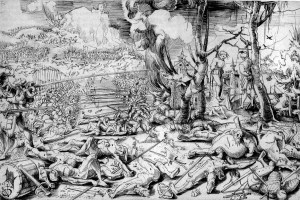
Battles have since then worked as backdrop, motivation and important story and character development opportunities. Urs_Graf_Schrecken_des_Kriegs_1521

In general, in my roleplaying campaigns I do put a significant emphasis on the ‘game’ part of ‘roleplaying games’. We have to roll some dice, follow some rules and let part of the tension and drama emerge from the randomness of letting the dice fall where they may. Therefore it is important that we also have a ‘game’ around some of the battles and major skirmishes of the game, and that they outcome of each battle came into question. The characters influence on the outcome was in the beginning very limited, but as they grew in power, the influence has become more significant.

I thought my experience with it could be helpful to others who want to include that element in their campaign.

The Story mode:
When the characters were weak and socially and politically unimportant, I let the mood, action and drama evolve around the build-up, march to the battlefield and the aftermath of the battle. This includes solving supply problems, scouting, recovering lost messages, surviving assaults on their supply lines and so on. I used the pushing paper method (below) for a minor skirmish. The battle itself can be entirely narrated, particularly when they are very weak, or you can add an event element. In my first use of this method they lost, and the whole retreat (read, fleeing in panic), was a central element of the story, and the events around that gave a lot of mood and depth to the story, and both a feeling for the characters that they were unimportant, and at the same time had an impact by rescuing some and creating some order in the chaotic aftermath.

Pushing Paper:
To have a battle that involves dice, but without using 300 minis, I’ve used a Warhammer Fantasy Battle Light game using paper and card board. I make a map on our white board battle map, and create a card board counter for each unit. We roll D6 for their weapon skill (3+, 4+ etc. to hit), and D6 for armor saves, but I cut toughness rolls to reduce the number of dice rolls. Casualties were simply counted off the unit’s strength, either at a 1:1 ratio, or using whatever ratio that seemed appropriate for the size of the battle. I also have some rudimentary rules for movement, cover etc.

In a battle where the characters were leading their town militia and a contingent of knights, the characters were their own unit, and I reverted to regular role-playing rules, when they entered into combat with the opposing champion.

This worked quite well for large skirmishes and minor battles. It has gotten the characters really involved, it is a fun break away from the regular roleplaying combat, and it creates its own narratives about the heroic squires who routed a group of beastmen taking only one casualty and so on. It also has the group invested in getting more troops to defend their town, as it has an actual game impact.

Event-based battle:
I’ve run two versions of these types of battles:

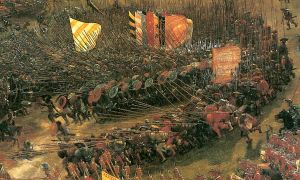
Type 1:Alexanderschlacht_(Soldaten)
You can have a battle where the characters have no impact on the outcome of the battle, but each experience events during the battle. This could be individual opportunities for heroics, or the opposite – to skulk away or flee a challenge. The key element in my view is that there are significant choices to be made. In one instance, as they were part of a company, they had the chance to rescue or help other members of the company before they got killed or maimed (or not). I also enjoy keeping the events partly random, as it adds to the ‘game’ element and prevents me from designing challenges that were specific meant to be just the right difficulty for any character.

Type 2:
A second type is a battle where the characters are powerful and can, as a team, significantly influence the final outcome. I introduced a victory point system for this type of battle. In essence, each event can lead to various numbers of victory points, and the battle will have different outcomes depending on how many victory points they score. The victory conditions obviously have to be predetermined. Again I think a key point is having hard choices for them to make, as the Warhammer universe is very grim. Thus sacrifice and bitter choices are central parts of the game. For example, they had to indirectly select which commander they wanted to lead the human forces. There were three choices, and all three had benefits and drawbacks, but they couldn’t get an “optimal” commander.

By introducing victory points I also force the direction of the campaign into the hands of the characters, and prevent myself from fudging it into the result I prefer. I think it is very satisfying to play, and reinforces that we are playing a game.

All in all, I find the battles to be very fun and dramatic elements in the campaign, and as a theme for a Warhammer Fantasy Roleplay campaign, it has worked extremely well.

One a side note, the format was initially inspired by Bernard Cornwell’s excellent Sharpe series of novels, about an English soldier fighting all the way through the Peninsular Campaign of the Napoleonic War.

Earthdawn and D&D

I had the pleasure of DM’ing a game of Earthdawn last week. We got together most of the old group from high school and had a full day of gaming. It was great fun, but also displayed the strengths and weaknesses of Earthdawn, which was created in the mid-90s, compared to today’s games. For those […]

Mortal Wounds in D&D

I received the comment from one of my players that he in D&D would miss the worn and battered look of PCs after years of adventuring that is the natural outcome in a game like Warhammer Fantasy Roleplay. I agree with him, and I do think that the consequences of falling in battle in D&D can seem a bit trivial. Therefore I made a simple Mortal Wounds system, which is a merger between a regular critical hit table and the Lingering Injuries presented as an option in the Dungeon Masters Guide.

There are a couple of purposes:
– Having a consequence of dropping to 0 hit points for the individual (it is dangerous!)
– Giving characters marks of leading a rough and dangerous life
– Draining additional attention and resources during combat

I’ve already tested it in my 1st and 2nd level group playing Temple of Elemental Evil. During the first session, when I hadn’t introduced it yet, the Paladin dropped to 0 hit points three times (!). It is not that uncommon at low levels, so I introduced a Constitution save to mitigate the risk somewhat among the front-line types.
During the second session, the paladin dropped twice and the monk once. Both failed one saving throw, and the paladin lost 3 teeth and the monk bled badly. My conclusion is that from my limited experience it seems to be working. Both examples added drama and fun.

I have both a table for physical and energy attacks. The rule and physical table looks as follows:

Mortal Wounds:

Whenever a creature drops below 0 hit points, and thus receives a potentially mortal wound, there is a risk that the being will suffer some kind of permanent injury, or a more long lasting injury that requires special care or treatment. The player rolls a Constitution Save DC 8 + damage exceeding 0. If he fails the adventurer or creature rolls on the mortal wound table.

Physical Attacks:

Roll: 2d10 Effect:
2 The blow knocks you into a coma. You will not awake for 2d6 days unless a greater restoration is cast.
3 A rib is broken and causes internal bleeding. You receive disadvantage on stabilization rolls.
4 Your kidney is bruised, and you subsequently frequently piss blood, and have to go several times per night to piss.
5 You are hit on the head and receive a concussion. After stabilizing you will need 3 days of full rest. Until the rest has been completed you receive disadvantage on all saving throws, and cannot gain benefits from short rests.
6 A kneecap is hit, shattering it. The leg is useless until 10 points of magical healing is administered, and you are in incredible pain until it is done, screaming as loud as you can unless succeeding in a DC wisdom save.
7 The blow destroys a tendon in one of the legs, and you cannot walk without support until you have fully restored your hit points. You receive a limp on either left or right leg.
8 The blow damages either a non-magical weapon or shield held, armour worn or backpack. Roll randomly between them. You have to have the item repaired by a professional before it is usable again.
9 One of your limbs is broken (roll 1d4). Until at least 10 points of magical healing has been received the limb is useless.
10 A major vein is hit and you are bleeding heavily. Disadvantage on stabilization roll.
11 1d3 teeth are shattered or knocked out.
12 The hit will leave a large scar on a random body part 1: head 2: left arm, 3: right arm, 4: body, 5: left leg, 6: right leg
13 Your nose is broken and bleeds heavily. The nose has to be set or become misaligned.
14 The blow crushes or slices of a finger. Roll 1d8 to determine which digit.
15 The blow shatters the bones in one of your arms (roll random), damaging the nerves. Anything held is dropped, and you have disadvantage on any attack rolls using the hand, until restored to full hit points and having a restoration spell administered. You will retain a slight shake in the hand, which can only be removed by a regenerate.
16 You are hit heavily on the jaw dislocating it (which makes you unable to speak clearly) until magical healing has been administered.
17 One of your ears is mangled or sliced off by the blow. Roll randomly which. It can be restored if you receive at least 10 points of magical healing within 3 rounds.
18 Several bones in your face are crushed misaligning your face. You lose 1 point of Charisma, unless a cure spell is administered every day for the next three days to restore it. Regenerate or heal will also remove the damage.
19 One of your hands is destroyed. Unless magical healing is applied within 3 rounds, the hand is useless or severed.
20 An eye is destroyed. You receive -2 on ranged attacks. Regenerate can restore the eye.

Warhammer über-talents

In my 6-year long Warhammer 2nd edition campaign, I ran into the problem that some of the characters were running out of meaningful career exits and basically had nothing left to spend their experience on. At first I made a ‘Badass List’, which was simply a selection of skills and talents they could buy, even if they weren’t part of their career, simply because they were so experienced adventurers (such as Intimidate, Hardy and Seasoned Traveller).

When that wasn’t enough, I decided to make a second tier of talents: the Ultra-badass list. We’ve been using it for several sessions now, and a lot of them are actually playing out quite well. It is quite an epic campaign at this stage, so another 5 in strength or an extra parry does not break the feel of the campaign, but clearly puts them into a very special category among the heroes of the empire. And a trait like Fearless for the extremely experienced and not very bright Kislevite warrior makes so much sense – it seems silly to roll fear checks that could incapacitate him over a vampire or a couple of skeletons, when he has met and seen dozens of them, and other, worse, things.

I’ve also tried to keep the Faustian elements for the magical talents, and last session it worked really well. The bright wizard (Stefan Zauber) used his Blazing Furnace talent several times, and despite having 82 in Willpower, he began gaining insanity points and it pushed him close to the edge.

Warhammer is all about personal sacrifice against the forces of evil and the slow but inevitable descent into darkness. Having a Wizard Lord tethering on the edge of insanity in his attempts to save the empire is perfect for the mood and theme.


The Ultra-badass list:

Deadly Charge
Prerequisite: 3 Attacks
Description: When making the charge attack action, the character can attack twice instead of once.
Xp Cost: 200

Hitting the weak spots
Prerequisite: Sure Shot, BS 60
Description: When using a missile weapon, the weapon also counts as having the Armour Piercing Quality and the range of your missile weapons are increased by 50%.
Xp Cost: 200

Go for the Eyes!
Prerequisite: Sure shot
Description: You ignore an additional point of amour when using the aim action.
Xp Cost: 300

Heroic Strength
Prerequisite: Very Strong
Description: Add an additional 5% to your strength profile.
Xp Cost: 300

Heroic Toughness
Prerequisite: Very Resilient
Description: Add an additional 5% to your Toughness profile
Xp Cost: 300

Heroic Skill with Arms
Prerequisite: Warrior Born
Description: Add an additional 5% to your WS profile.
Xp Cost: 300

Heroic Aim
Prerequisite: Marksman
Description: Add an additional 5% to your BS profile.
Xp Cost: 300

Heroic Reflexes
Prerequisite: Lightning Reflexes
Description: Add an additional 5% to your Agility profile.
Xp Cost: 300

Heroic Intellect
Prerequisite: Savy
Description: Add an additional 5% to your intelligence profile.
Xp Cost: 300

Heroic Force of Will
Prerequisite: Cool-headed
Description: Add an additional 5% to your willpower profile.
Xp Cost: 300

Heroic Charisma
Prerequisite: Suave
Description: Add an additional 5% to your Fellowship profile.
Xp Cost: 300

Never say die!
Prerequisite: Hardy
Description: You add 1 additional wound, and all crits made against you are reduced by 1 in severity, to a minimum of 1.
Xp Cost: 200 xp

The Aethyr is in my Blood
Prerequisite: Expert Aehtyric Attunement, any Arcane Lore
Description: When casting a spell, you can elect to add one to your casting roll for each of the magic dice you roll, at the cost of 1 wound for each bonus.
Xp Cost: 200

Deadly Missiles
Prerequisite: Mighty Missiles
Description: Your magical missiles are now exceptionally potent. You add 2 to each damage roll instead of 1.
Xp Cost: 200

Faster than the eye
Prerequisite: Master Dodge Blow
Description: You are now able to dodge missile attacks than you can see are directed against you, and you get +10 to pure Ag checks to avoid area attacks such as bombs, breath weapons and spells.
Xp Cost: 200

Wall of Steel
Prerequisite: Lightning Parry
Description: You can now sacrifice an attack to get an additional parry with your shield, in addition to the free parry, for a total of 2 parrys and 1 dodge per round.
Xp Cost: 300

Cat-like reflexes
Prerequisite: Sixth Sense or Master Perception
Description: You gain +10 to initiative
Xp Cost: 200

Fearless
Prerequisite: Stout-hearted
Description: You are immune to fear and treat terror as fear.
Xp Cost: 200

Morr and I are old friends
Prerequisite: Fearless
Description: You are immune to fear and terror
Xp Cost: 200

Feel the might of my god!
Prerequisite: Strike Mighty Blow, Any Divine Lore
Description: As a full attack you can strike a blow, and whisper a prayer to your god, and roll a WP check, to receive +1 damage for each casting dice, on a successful hit. The dice are still rolled to check for Wrath of the Gods.
Xp Cost: 200

Nimble Feet
Prerequisite: Swashbuckler or Fleet Footed
Description: You can move up to 10 feet in addition to a full attack action (you still draw attacks of opportunity).
Xp Cost: 200

Charmed fate
Prerequisite: Luck
Description: You receive an additional luck dice per day.
Xp Cost: 300

Hammer of the Gods
Prerequisite: Strike Mighty Blow, Heroic Strength
Description: Your melee attacks now count as having the Armour Piercing quality.
Xp Cost: 200

Fountain of knowledge
Prerequisite: Seasoned Traveller
Description: You now count as having all Common Knowledge skills
Xp Cost: 200

Lethal hits
Prerequisite: Strike to Injure
Description: The critical value of any critical hits you inflict are increased by an additional 1.
Xp Cost: 200

Close Quarter Battle Master
Prerequisite: Sharp Shooter, Strike to Injure
Description: You no longer take a penalty when firing into melee.
Xp Cost: 200

Armour Expert
Prerequisite: Strength 50, Toughness 50 or Sturdy
Description: You no longer take a penalty to Ag from wearing medium armour, or a penalty to movement from wearing heavy armour.
Xp Cost: 300

Blazing Furnace
Prerequisite: Aehtyric Attunement, Master Channeling , The Aethyr is in my Blood, Any Arcane Lore
Description: All spell’s area of effect are increased by 50%. Up to your magic characteristic number of damage rolls have the impact quality. For each damage roll with the impact quality roll WP or gain an insanity point.
Xp Cost: 200

Eagle Eye
Prerequisite: Sharp Shooter, BS 60, Hitting the Weak Spots
Description: Extreme Range hits are now made with only -10 penalty, and long range suffers no penalty.
Xp Cost: 200

Fly on the Wall
Prerequisite: Master Scale sheer surface
Description: You may use your agility in place of strength when climbing.
Xp Cost: 300

Converting Temple of Elemental Evil to 5th Edition

I’m using Brian C. Rideout’s conversion notes to 5th Edition, which can be found here:

http://newworldscoaching.ca/downloadable/toee.pdf
It is a very well done conversion. There are a few minor errors (for example on xp for monsters), and it has to be adjusted to fit with the group size to some extent. My first session had a massive group of 7 players, so I to add a few monsters to most of the encounters.
I also made individual names and equipment for the brigands (bandit NPCs from the MM), as it was likely that one or more would be captured and interrogated.

That leads me to the mention: I find it puzzling, that the original module has names for some NPCs, but not for all of them? Why would one give the name for all the village councilors, except the village elder? Why give a name for a main boss, but not for the brigand leader?

Bringing the world to life:

Mr. Rideout also added some encounters and events that add flavor to the settlements of the campaign. These small events and encounters are very valuable, easy to run and can easily be scaled. It is a great addition to the conversion material.

I used the first, when one of the characters (1st level Cleric of Olidammara) wandered alone around Hommlett, and ended up rescuing a kid from a Giant Tick, which had set upon his dog. It gave him a nice solo xp-bonus, and gave them something to talk about and the cleric a boost to his reputation in town.

Change in treasure amount
I differ somewhat on the treasure level of the conversion. The original module perhaps suffers from a lack of variety and higher power level than Dungeons & Dragons 5th edition, as Rideout also notes (there are several rings of invisibility among the NPCs, which is high powered).

But even with Rideout’s edits, I estimate that the level is still a bit high, when I look at the campaign we normally play. For example – the main boss in the Moathouse has 3 permanent items in the original version. One is a magical plate armour. In my view, the plate armour, which costs 1,500 gold pieces, and is quite hard to obtain in Hommlett, is a treasure in itself, and does not need to be magical to be seen as a very nice treasure. I will keep a permanent item, and add a scroll and a potion.

That said, as the party composition changes, depending on who attends from my large pool of players, I can be a little more generous, as the items will be spread across a much larger than normal amount of players.

We will be playing again next weekend, with some changes in party composition and size. I look forward to seeing how it changes the group’s approach to the adventure.

Temple of Elemental Evil as a casual campaign

We’ve decided to play a casual campaign using the AD&D 1ed. Temple of Elemental Evil (TOEE) mega-adventure. I’ve grown to become fascinated with the ‘old school’ style of play. And the great thing about TOEE is that it takes place in a geographically small area where many adventurers gather, which makes it easy to have characters come and go, which enables me to set up the campaign in a more casual format.

I’ve set up the conditions for the campaign differently from what I normally do:

  • I have a pool of 12-14 players who would like to participate when they have the time or is in town.
  • The adventuring group consists of whoever can attend that game day.
  • Each sessions ends with the group retreating to a town or campsite outside of the dungeon (unless hindered completely in-game). This enables a more ‘episodic approach.
  • The players can make maps and learn things inside the game, which can be shared between the games to create a working meta-level to the campaign, where the real-life talks about what happened in the game, can be useful to people when they gather to play next time.

So why have I set the game up this way?
When I was younger, I scoffed at the mega-dungeons, and thought them to be almost unplayable, and that my players would become bored with one single dungeon they need to map and go through (oh! Another 5 gnolls in a 20×20 foot room…).

I still think that constant dungeon-crawl will get boring, but there are a few reasons, why I think this will work better than I used to think:

  • First of all, we’ve come to appreciate the more ‘old school’ play style. We enjoy just sitting down, killing some gnolls, gain some xp and drinking a couple of beers.
  • The emergent game-play and how the dungeon should react to intrusion make exploration more fun.
  • We don’t play as often and players will rotate to some extent, so it will stay fresh.
  • I can better see how the module intends for the DM to create a lot of extra material in addition to the published material.
  • Dungeons & Dragons 5th edition is better suited to this type of module. It can resolve combat quicker than previous editions, which makes this kind of combat heavy game run more smoothly.

We will have our first session April 12, with 6 players. I hope to play 5-8 times per year, but we will see how much time we have, and how popular it is (I respond to popular demand).