WTF is that? And Tremors… Session 13

The session evolved around exploration of the road to the site of iron ore the players heard about from the elves. It ties in with one of my story-lines, which is the development of the settlement, from very vulnerable to a strong permanent settlement.

The game started right off the bat with initiative rolls for an encounter with two Displacer Beasts. They wounded the characters, but were overcome. I enjoyed that they met a creature they faced before. Meeting one Displacer Beast was a nasty surprise at level 2, but two were manageable at level 4-5. It demonstrates that they’ve advanced in power, which is always a nice feeling as a player. If I had rolled that four Displacer Beasts had shown up on the encounter table instead, it would have been an entirely different kettle of cats…

After some much needed rest, they continued moving south along the ancient road, and came across an ancient watch tower, surrounded by a low wall. Wisely, they decided to scout the place, and north of the ruin they found a tunnel, made by something fairly large. Whatever it was, they opted to draw it out, and using the bard’s bagpipes, the monster was drawn to attack. The monster was a homebrew creation; a large creature I named an Amoured Maw:

“It is the size and about the same shape of a rhino, but with shorter clawed legs, covered in hard, dark reflective scales, has a head that splits wide along its entire length into a teeth filled jaw, while the four fleshy tentacles growing from its back contains its sensory organs, as well as having nasty hooks on them. The Maw can burrow, but doesn’t do it fast enough for it to have a burrowing speed. It is an excellent climber though, using both its clawed feet and tentacles.”

The origins of the creature remain obscure to the characters, so it shall remain obscure here as well. It turned out to be a surprising, but not overly dangerous, battle for the group. The surprise was its reflective carapace (an ability the mighty Tarrasque has), that sent one of the Warlock’s spells back in his face, and the general toughness and damage output of the beast. The whole description and the reflected spell among the very first attacks, gave a nice ‘WTF is that?!’-moment, which I aim to have in this exploration focused campaign. But naturally, being 7 characters, they overcame a single monster, and went back to the tower, after figuring out that its lair was inside the semi-collapsed basement of the tower.

The tower itself was just a shell, but inhabited by 15 Stirges. They overcame a third of the

cong345a
This is pretty close to what I imagined the ancient roadside watch tower looks like. 

Stirges with a fireball and took a bit of damage while dealing with the rest. I had hope the party would go to the tower, clear it of Stirges, and camp there, setting them up for a night time encounter with the Maw, but they were smarter than that (which is good, I gues…). The players did note, how the tower is a good site for rest between the settlement and the iron deposit.

The next couple of days the kept moving south towards the site of the iron deposits, and close to the location, they discover a small lake, with a ruined villa sitting on its shore. Imagine a large more or less ancient Roman style villa left in a forest for many hundreds of years. Moving closer, they noticed some weird round areas of disturbed ground.

Tremors in the ground…

tremors1
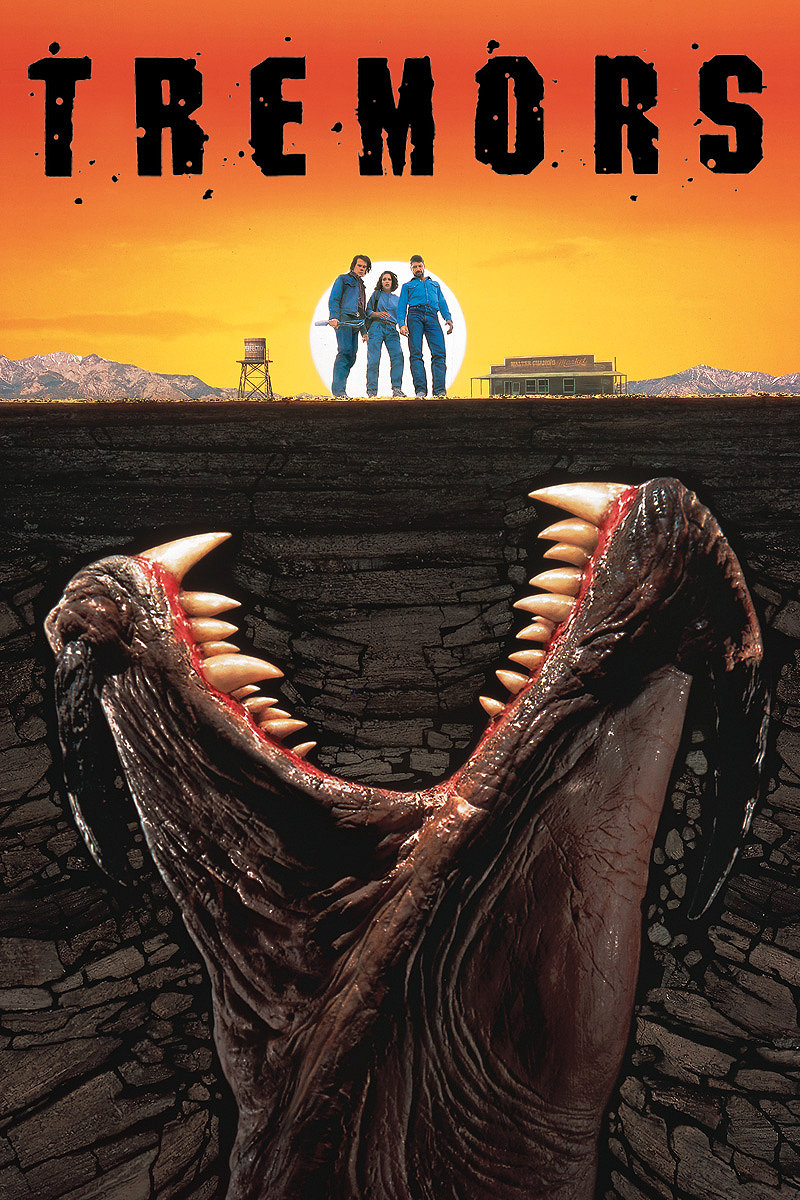
The Corpse Worm is obviously inspired by the horror b-movie Tremors. Which I thought was quite scary when I was a kid in the early nineties. 

Just outside of the villa a Corpse Worm attack. A huge monstrous worm (but smaller than a Purple Worm), which smelled of rotting meat and had leathery skin, burst out of the ground. It attacked Weylin, the druid, from below and snatched him, and the next round pulled him down to its watery tunnel below. Jarn, jumped after (and rolled a crit). A chaotic battle ensued, with Jarn struggling down the collapsing hole the worm came through, trying to kill it, before it disappeared with Weylin, and the others trying to hit the beast with ranged weapons and magic, illuminating the worm with faerie fire, or helping Jarn getting back to the surface, before the shaft collapsed above him. Weylin manages to escape the jaws of the worm and activate his Staff of the Woodlands and summons a wall of thorns in the narrow water filled tunnel he is trapped in. The combined damage slays the worm, and Weylin finally grasps Jarn’s hand, who can pull him back to the surface with the aid of his companions.

Despite their wounds, they afterwards decided to search the villa, and they (surprise!) find a half-flooded cellar below. They enter the cellar, and soon Arak – the half-orc – falls through a floor into another tunnel, but his comrades manage to get him out, before anything emerges.

Next time, we will see if there are more worms? And what the iron deposit site actually looks like.

Evocative Combat:

I think this session was dominated by a couple of fun and memorable encounters. As I’ve mentioned before, I try to modify and create monsters for around 2/3s of the combat encounters, because I want my seasoned group to never know what they are facing, and rarely know what they are vulnerable against or resists. Fortunately, D&D 5th is very easy to mold and change, as long as you don’t care about encounter xp and difficulty too much.

The encounter with the worm was the kind of combat encounter that I really like. A fluid scene in multiple dimensions, and not simply minis being moved tactically around the map (which also has its place, and is fun). It can be difficult as the DM to clearly give everyone a sense of what is possible, and where everyone is, but having only one opponent makes it a lot easier to manage – and combat happens quickly compared to moving minis around. I may not have followed the ‘say yes’ rule as much as I should, but I think it had tense and fun action – and a real danger to one of the characters.

The Wall of Thorns spell also showed itself as a ‘getting out of deep trouble’-spell.


Session 8: Scorpion trouble and a shield

The session had a full group of 7 players, and it is very enjoyable, but naturally leaves less time for individual attention and combat takes longer.

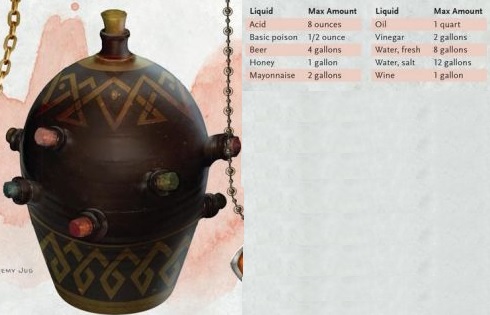
It began inside the small (randomly found) adventuring site the group discovered in session 7. They began the evening by identifying the treasure they found – a wand of secrets and an Alchemist Jug. The jug is actually quite a nice wondrous item, when you are in new settlement on a far away coast, as it can produce one type of liquid each day in various quantities, including water, mayo and honey.

alchemy-jug
The Alchemy Jug from the DMG pg. 150. 

I like the Wand of Secrets, as it helps me avoid the awful situation where players decide to search after secret doors in the right spot, but rolls too low on Investigation. Secret doors are fun when they are found!


Abbott – the strange warlock and noble son – also drew a question from my stack of background questions, and told us that his most significant memory from the war in their homeland was going through a village that had been pillaged and slaughtered. He declined to say, why that was significant…

From that point they travelled north, and I rolled an ambush in my random encounters, an Ettin in this case, who was arguing with himself. They relatively quickly dispatched him (80-ish HP doesn’t last long against 7 characters), and Arak cut off his heads and put them on a pole as a warning. The wizard, Welk, was a bit upset, as he spoke the language of the giants, like the ettin, and would have liked to gain information from him.

I rolled another encounter for the next day, and this time it was another minor adventuring site, and it turned out to be the lair of a huge giant scorpion with weird lichen and toadstools growing from its carapace. It was lurking in a large copse of toad stools with Shriekers around it. Down in its lair, they discovered a magical dwarven shield, with a throne marked on it, which confirmed to them, that there must be dwarves somewhere in the land they’ve settled in. They were also attacked by 6 scorplings, and was another reminder that 6 smaller foes – particularly when they can grapple and poison you – can be much harder to deal with than one large foe. The encounter had several of the players below 0 HP.

The next days of the journey was uneventful, and Korrick the dwarf bard and warrior, got to tell them, how he was accompanying a dwarven expeditionary force  as a record keeper, when they were ambushed, and he was forced to pick up arms and become a soldier. Eventually, they found the old track of the lost man-at-arms,and followed it to a large ruin where a lot of colorful flowers and toadstools were growing. There were many low ruins, but the main one looked almost like a base of a meso-american pyramid with several entrances in it and vegetation growing out of it from within.

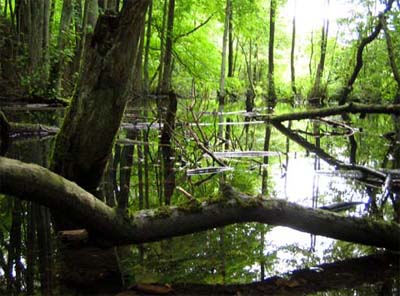
Swamp
A dark dank swamp – always a nice place for adventure… 

They found two sets of tracks leading away from the ruin and decided to follow the track instead of going into the ruin, which they wanted to return to later. Some miles from the ruin the area became more marshy, and they saw charms in the trees and elven runes in the tree, which they translated into warnings of an ancient fey creature living in the area.

Jarn, the nominal leader of the group, could tell them of how his order once fought a coven of hags, and how badly that went, and that they can take the form of other humanoids. After some deliberation, they wearily decided to move forward and find a small swamp with a 150 foot tall tree stump growing in the middle, which is clearly the home of someone.

Next session is tonight! I look forward to seeing how they approach this challenge?


Books that Inspired my Campaigns – Part II

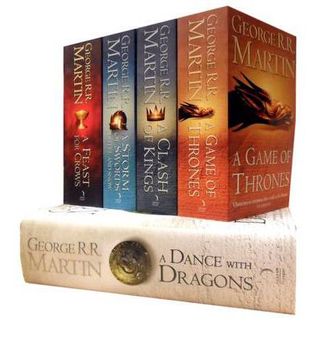
Song of Ice and Fire

This series made me step out of the traditional mold when it came to world-design. Before I read the first novels of the series, my campaign worlds had been pretty standard “European” or it had been Earthdawn (which as a game itself also inspired me a lot). Westeros was not what I found most inspiring, but the decadent and old lands of the east are very cool with places such as Astapor and Mereen. I made a campaign called the Far Seas, a maritime campaign with a lot of islands, where I put in big Jade pyramids, nomadic Halfling armadas, lost gods, fantastic cities with ancient monuments and strange magical effects. Looking at many published campaigns today, Far Seas isn’t exceptional, but it was a good step for me, and it was so popular that when I moved to another town, a frieSOIFnd of mine ran a campaign in that world. That is a pretty big compliment.
“Aggo was back next. The southwest was barren and burnt, he swore. He had found the ruins of two more cities, smaller than Vaes Tolorro but otherwise the same. One was warded by a ring of skills mounted on iron spears, so he dared not enter, but he had explored the second one as long as he could. He showed Dany an iron bracelet he had found, set with uncut fire opal the size of her thumb.”
– A Song of Ice and Fire


Dark Souls

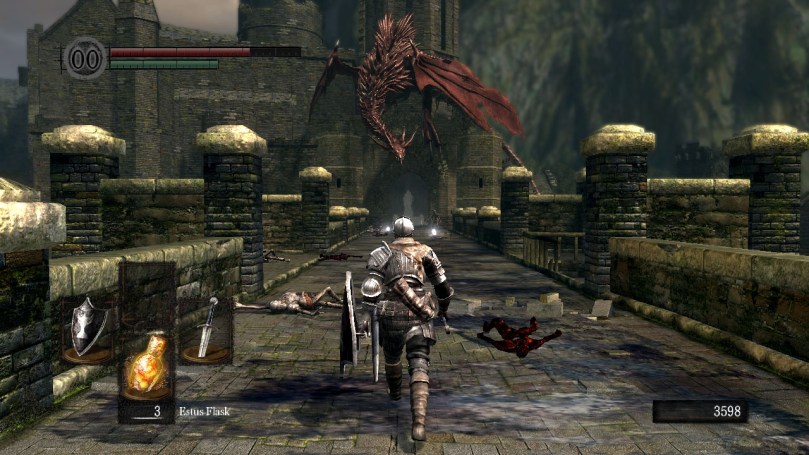
The fantastic video game Dark Souls is a masterpiece of game design. I’m intensely inspired by the level design. The way the world seamlessly flows together and slowly reveals new secrets and connections has to be experienced. The story of the world, its mythos, and the NPC’s stories and motives are extremely opaque and are only revealed by examining all objects and if certain specific steps are taken in the right order. And in Dark Souls outcomes and decisions are permanent, so if you attacked that NPC or he died in a battle, you will have to start a new game to try a different path. This is an exploration element that I really like as well, and is an approach I’m attempting in my current D&D campaign.

Watch the show ‘Extra Play’ on Youtube play and deconstruct Dark Souls game design.

They way that you avatar’s experience mirrors your experience as a player is masterful design. The setup of many of the monster encounters is also very interesting and can easily be used in D&D.

Dark Souls II has less interesting level design (it is still great), but it is also visually very inspiring for my current campaign.

When it comes to video role-playing games, it is – in my experience – when it comes to mechanics and exploration the closest you can come to a pen & paper game. The reason is that you can approach enemies and problems in many ways, which is close to your experience in a pen & paper game.

dark-souls
Approaching the Red Drake. The staircase on the right is a wise move.


For my current D&D campaign I’ve not fully taken the plunge into making my own version of a coherent world where the campaign basically all takes within a dungeon. I’ve more tried to let myself be inspired by the design philosophy behind it. If I were to go all the way, D&D would not necessarily be a great system, as many of the spells would need to be modified. But any system would probably need to be modified, in order for the system to emphasize the way the world and campaign should work.

 Playing at the World
This book is about the history of D&D and the games that led to this revolution. It led me deeper into the ideas in the original D&D and made me want to go back to basics – although without going back to some of the OD&D versions of the game, as I have a preference for the smooth mechanics of 5th edition. It is a massive book (600+ pages), and you will learn something you didn’t know.

playing at the worldOne thing that I’ve taken directly to heart in both my home brew campaign and in our Temple of Elemental Evil game is that D&D originally had three core aspects: combat, exploration and logistics. Exploration is of course a cornerstone of my new homebrew. The last part I also find very interesting. I think it is quite apparent that among my players there are different preferences for these elements. Logistics is about how much ammunition to bring, what spells to select and dividing treasure. I have previously skipped this somewhat, but I will try to have it as a more intentional element, for example by using the construction rules from Pathfinder Ultimate Campaign.

It led me to buy many vintage modules online, and there are some great ideas in them as well.

“Into the dramatic structure of Dungeons & Dragons, the mode of logistics injects some much needed banality: after the suspense of exploring and the adrenaline of bloodshed, the chore of logistics, even when they border on tedium, serve as an important counterweight to adventures.” (In Playing at the World, by Jon Peterson)

The Scramble for Africa

Africa is a vast and extremely varied continent, and both its nature and

scramble for africa
Amazon naturally has all the books: if you’re interested

history is an inspiration to me. Recently I read this history of how the European Powers explored and carved up between them the many independent kingdoms and more or less inhabited wilderness of Africa. The exploration element is as always interesting to me – the hardship in traversing deep jungle and the couple of years that Stanley spent traversing the continent East to West. The brutality of the conflicts and of the rule of some of the African kings can also be used in D&D, as can the power play between the nations trying to grab as much land as possible.

“Stanley looked at the majestic brown river flowing past the tall square houses and the baobab trees. Its calmness seemed to him a kind of hypocrisy. It had robbed him of so many of his best men, including Frank Pocock, the last survivor of his three white companions. Even now Stanley felt the hollowness of his triumph. He had sailed from Zanzibar with more than 250 men, women and children. Only 108 would now return safely to their homes.”
The Scramble for Africa, Stanley arrives at the west coast of Africa

The Italian Renaissance

Italy, before it became a nation and was a collection of city states, is so full of intrigue, war and conflict that period has near limitless potential for inspiration for almost any role-playing game – but for Warhammer Fantasy Role-play in particular. As there is so much surviving art and written works from the region and period, there is a lot of potential reading to do. I just needed an overview before a visit to Florence, and I picked up The Italian Renaissance. It deals with both a few central topics such as Women and Princes and the State, and has a chapter on each of the major city-states, and for someone growing up in a modern democracy; I find it helpful to be reminded of the attitudes, government structures and social structures of other people and other times. It can add some memorable tweaks to your NPCs and campaign setting.

IMG_0386
Monument to the most feared mercenary genral in Italy John Hawkwood (Fading Suns, anyone?), who fought for Florence

“On this knowledge the Council acted swiftly and silently, for no public trials enlivened the Venetian scene, and there were no appeals. Once found guilty, the prisoner was sometimes quickly and efficiently strangled in the dungeons or thrown into a part of the lagoon reserved for the purpose, where no fishing was allowed; or hanged by one leg from the pillars of the Doge’s Palace; or quartered and distributed about the city; or buried upside down in the Pazetta, legs protruding; or beheaded – as a public spectacle – between the great pillars on which stand Saint Theodore, with his crocodile and the winged lion of Saint Mark.”
– The Italian Renaissance, on how its Council of Ten kept power through its intelligence system.


Dresden Files

The Dresden Files didn’t make it to the top-10 list, but I include it as an honourable mention, as I think it can teach you a thing or two when it comes to upping the stakes and making the stories more action packed.  The Dresden Files demonstrates that you can always kick it up a notch!7bcd5b3f4e4c8b81976032eb67030845

I wished for a TPK…

7rqen

I don’t normally wish for it, or plan for it, but a TPK would just have been great for the story. Let me try and explain why…

We were playing our sixth session of Temple of Elemental Evil, this time with only 4 players with 3rd level characters and the paladin was the only healer. At first they accidentally ventured down a sloped hallway to level 2, and saw the chained hydra and chained owl bear. They engaged the owl bear, and killed the troll keeper that came after with some trouble. They explored a bit, and established that there was at least one more troll in the area. Wisely, they went back to level 1, and found their way into one of the two ghoul lairs. This is where things got really interesting.

Ghouls, and more ghouls

Ghoul
The ghouls in 5th edition are nasty, as when you hit paralyzed characters it is automatically a critical hit. This illustration is from the 3rd edition of the D&D Monster Manual.

It was one of the many encounters in the temple that quickly turns into several waves of enemies. In this case, one of the ghouls from the first room will run into the adjoining rooms and get help from its buddies. Furthermore, two cowardly ghasts will be watching from a third room, and join the combat if they are winning, but I decided to add the mechanic that if more than half of the four ghouls were alive after a couple of rounds the two ghasts would flee.

Fortunately for the characters they killed the third ghoul by the end of round two, making the two ghasts flee. However, they flee through the room of the two boss ghasts, and these two will not back down from a fight (as described in the module).

So severely depleted, with the barbarian at 1 hp, the monk had been down once already and with no more healing power or potions, they had to face two ghasts with extra hit points. It was clear it could turn ugly quickly. With the damage output of the ghasts, any of the players would go down with one hit, which would reduce their damage output, and further increasing the odds of more players going down. My first internal reaction was ‘crap! what do I do if I kill them?’ But then it dawned on me that it would be great if I wiped them out.
Because, as you may have read here previously, I have a pool of around 12-14 players for this campaign, and I play with the group that shows up that evening (max 7 players). The area around the temple attracts a lot of adventurers, so it works out really well. It is very dynamic, and we get to see different group combos. Each session ends with the party returning to the surface. The rest of the adventurers stay at their base camp or in Hommlett, resting and planning their next raid on the dungeon.

Great flavor and motivation
Had they TPK’ed, I would have sworn the players to silence, and their party would have been yet another group of adventurers disappearing without much trace in the dangerous catacombs beneath the Temple of Elemental Evil.

It would have created a fantastic motivation for the other players (and the TPK’ed players with new characters) to go and find out what happened, and perhaps find surviving captives, or avenge them, if they weren’t (I would probably have rolled randomly who survived). I could have them as sacrifices in the deeper temples, I could have them charmed or dominated, they could be torture victims of the cult leaders. And their magic loot would turn up in new places, adding a new dimension of investigation and interrogation, such as: ‘Where did you get this cloak? This was worn by our friend Ishmael the last time we saw him…?!’ The extra sense of danger in exploring the dungeons, when the players know a TPK can happen, would also add to the tension of the game.
tumblr_msrnpeO40g1rrofo2o1_4001
As it turned out, I rolled very poorly for the two ghasts, hitting the players zero times, and the players managed to win the day with very high damage output. Great for them…

But I think it is fair to say that I don’t fear having a TPK in the future. I may even wish for it, a little bit.

Weapon materials in D&D 5ed

I am trying to avoid adding complexity and sub-systems to my game, but for my campaign world to be thematically coherent I did decide to make a system for weapon materials, so there is a difference between bronze and steel. As the group is in  a remote land, as part of the first settlement in this “undiscovered” realm, I try to enhance the need to be self-sufficient, add incentive to explore and find new things, and that when exploring you need to be selective in what you bring with you on your travels (I know, that consideration disappears when they get a big bag of holding…)

6-krigsscene-farve-stor (1)
Imagined scene from the early Iron Age, done in connection with the bog body of the Danish Tollund Man. Image by Niels Bach. Read more at: http://www.tollundman.dk

I’ve tried not to make it too punitive to the characters, but it should push them to carry alternate weapons, rest after encounters and take down-time to craft their own items and so on.

As magic weapons and armour slowly will become available, I don’t foresee this to still be a very relevant rule-set after level 10. But as mentioned, the rules are meant to create mood and atmosphere.

Weapon quality and material
As not all cultures have the same level of technology within manufacturing of arms and armour, different enemies will have weapons and armours made from various materials with various properties, strengths and weaknesses. As to not skew the combat rules overly, most of the materials have their most significant impact on weight, price and production time, which can be important far from civilization.

Damaging and breaking weapons and armour
Whenever a combatant rolls a natural 1 in combat with a weapon, not made from steel, he has to roll a DC 10 DEX ability check to avoid the weapon breaking. If he succeeds using the weapon still confers disadvantage until it has been serviced during a short rest.

Whenever a combatant is hit with a natural 20, his non-steel armour gets damaged and he loses 1 point of AC, until he spends a short rest mending the damage.

Steel
Steel can in the old world (almost) only be crafted by dwarves, who knows its secrets and can create the temperatures necessary to forge it. Their arms and armours are highly prized, also among its enemies, and can easily fetch several times the price of regular iron forged weapons.

Steel weapons don’t need to roll for damage or breakage, unless fighting against a foe with magical weapons or armour.
Medium and heavy steel armour weighs 10% less than iron armour, as it needs less material for the same level of protection.

Rapiers are a new type of weapon used by the wealthy in the City-States, and it can only be made from steel.
Steel weapons and armor costs around 5 times the listed price in the Player’s Handbook.

Half-Plate and Full Plate are always made from steel and cost the price listed in the PHB.

Bronze spear heads

Iron
Iron weapons are the default weapons in the Player’s Handbook. They comply with the breaking and damaging rules above.
Half-Plate and Full plates cannot be made from iron.

Copper & Bronze

Both materials are weaker than iron, and when fighting against steel weapons they automatically suffer the effects of damage on a roll of a natural 1 or natural 20 (for armor). If fighting against iron weapons the normal rules for breaking apply.

Stone & bone
Stone weapons suffer a -1 damage penalty against iron and steel armour. However, some cultures have processes that make the stone hard as iron or steel. The weight is still greater than comparable iron or steel weapons.

flint arrows

Bone breast plate: Made from mighty beasts, these breastplates function as regular breastplates, due to the high level of craftsmanship and density of the bone used. They would be highly prized in their culture.

Scale Armour: scale made from regular scales of beasts or from thick bone chips work as a hide armour, but scales or bones from truly dangerous beasts or magically treated can work as a scale mail or splint mail, depending on the construction. The scales of these beasts are equivalent of iron, but can be broken by steel.

Magical weapons:
Magical weapons or armour cannot be broken through regular combat. Special significant events have to occur to endanger them, such as Elder Dragon fire, volcanos and epic level magic.

Warhammer über-talents

In my 6-year long Warhammer 2nd edition campaign, I ran into the problem that some of the characters were running out of meaningful career exits and basically had nothing left to spend their experience on. At first I made a ‘Badass List’, which was simply a selection of skills and talents they could buy, even if they weren’t part of their career, simply because they were so experienced adventurers (such as Intimidate, Hardy and Seasoned Traveller).

When that wasn’t enough, I decided to make a second tier of talents: the Ultra-badass list. We’ve been using it for several sessions now, and a lot of them are actually playing out quite well. It is quite an epic campaign at this stage, so another 5 in strength or an extra parry does not break the feel of the campaign, but clearly puts them into a very special category among the heroes of the empire. And a trait like Fearless for the extremely experienced and not very bright Kislevite warrior makes so much sense – it seems silly to roll fear checks that could incapacitate him over a vampire or a couple of skeletons, when he has met and seen dozens of them, and other, worse, things.

I’ve also tried to keep the Faustian elements for the magical talents, and last session it worked really well. The bright wizard (Stefan Zauber) used his Blazing Furnace talent several times, and despite having 82 in Willpower, he began gaining insanity points and it pushed him close to the edge.

Warhammer is all about personal sacrifice against the forces of evil and the slow but inevitable descent into darkness. Having a Wizard Lord tethering on the edge of insanity in his attempts to save the empire is perfect for the mood and theme.


The Ultra-badass list:

Deadly Charge
Prerequisite: 3 Attacks
Description: When making the charge attack action, the character can attack twice instead of once.
Xp Cost: 200

Hitting the weak spots
Prerequisite: Sure Shot, BS 60
Description: When using a missile weapon, the weapon also counts as having the Armour Piercing Quality and the range of your missile weapons are increased by 50%.
Xp Cost: 200

Go for the Eyes!
Prerequisite: Sure shot
Description: You ignore an additional point of amour when using the aim action.
Xp Cost: 300

Heroic Strength
Prerequisite: Very Strong
Description: Add an additional 5% to your strength profile.
Xp Cost: 300

Heroic Toughness
Prerequisite: Very Resilient
Description: Add an additional 5% to your Toughness profile
Xp Cost: 300

Heroic Skill with Arms
Prerequisite: Warrior Born
Description: Add an additional 5% to your WS profile.
Xp Cost: 300

Heroic Aim
Prerequisite: Marksman
Description: Add an additional 5% to your BS profile.
Xp Cost: 300

Heroic Reflexes
Prerequisite: Lightning Reflexes
Description: Add an additional 5% to your Agility profile.
Xp Cost: 300

Heroic Intellect
Prerequisite: Savy
Description: Add an additional 5% to your intelligence profile.
Xp Cost: 300

Heroic Force of Will
Prerequisite: Cool-headed
Description: Add an additional 5% to your willpower profile.
Xp Cost: 300

Heroic Charisma
Prerequisite: Suave
Description: Add an additional 5% to your Fellowship profile.
Xp Cost: 300

Never say die!
Prerequisite: Hardy
Description: You add 1 additional wound, and all crits made against you are reduced by 1 in severity, to a minimum of 1.
Xp Cost: 200 xp

The Aethyr is in my Blood
Prerequisite: Expert Aehtyric Attunement, any Arcane Lore
Description: When casting a spell, you can elect to add one to your casting roll for each of the magic dice you roll, at the cost of 1 wound for each bonus.
Xp Cost: 200

Deadly Missiles
Prerequisite: Mighty Missiles
Description: Your magical missiles are now exceptionally potent. You add 2 to each damage roll instead of 1.
Xp Cost: 200

Faster than the eye
Prerequisite: Master Dodge Blow
Description: You are now able to dodge missile attacks than you can see are directed against you, and you get +10 to pure Ag checks to avoid area attacks such as bombs, breath weapons and spells.
Xp Cost: 200

Wall of Steel
Prerequisite: Lightning Parry
Description: You can now sacrifice an attack to get an additional parry with your shield, in addition to the free parry, for a total of 2 parrys and 1 dodge per round.
Xp Cost: 300

Cat-like reflexes
Prerequisite: Sixth Sense or Master Perception
Description: You gain +10 to initiative
Xp Cost: 200

Fearless
Prerequisite: Stout-hearted
Description: You are immune to fear and treat terror as fear.
Xp Cost: 200

Morr and I are old friends
Prerequisite: Fearless
Description: You are immune to fear and terror
Xp Cost: 200

Feel the might of my god!
Prerequisite: Strike Mighty Blow, Any Divine Lore
Description: As a full attack you can strike a blow, and whisper a prayer to your god, and roll a WP check, to receive +1 damage for each casting dice, on a successful hit. The dice are still rolled to check for Wrath of the Gods.
Xp Cost: 200

Nimble Feet
Prerequisite: Swashbuckler or Fleet Footed
Description: You can move up to 10 feet in addition to a full attack action (you still draw attacks of opportunity).
Xp Cost: 200

Charmed fate
Prerequisite: Luck
Description: You receive an additional luck dice per day.
Xp Cost: 300

Hammer of the Gods
Prerequisite: Strike Mighty Blow, Heroic Strength
Description: Your melee attacks now count as having the Armour Piercing quality.
Xp Cost: 200

Fountain of knowledge
Prerequisite: Seasoned Traveller
Description: You now count as having all Common Knowledge skills
Xp Cost: 200

Lethal hits
Prerequisite: Strike to Injure
Description: The critical value of any critical hits you inflict are increased by an additional 1.
Xp Cost: 200

Close Quarter Battle Master
Prerequisite: Sharp Shooter, Strike to Injure
Description: You no longer take a penalty when firing into melee.
Xp Cost: 200

Armour Expert
Prerequisite: Strength 50, Toughness 50 or Sturdy
Description: You no longer take a penalty to Ag from wearing medium armour, or a penalty to movement from wearing heavy armour.
Xp Cost: 300

Blazing Furnace
Prerequisite: Aehtyric Attunement, Master Channeling , The Aethyr is in my Blood, Any Arcane Lore
Description: All spell’s area of effect are increased by 50%. Up to your magic characteristic number of damage rolls have the impact quality. For each damage roll with the impact quality roll WP or gain an insanity point.
Xp Cost: 200

Eagle Eye
Prerequisite: Sharp Shooter, BS 60, Hitting the Weak Spots
Description: Extreme Range hits are now made with only -10 penalty, and long range suffers no penalty.
Xp Cost: 200

Fly on the Wall
Prerequisite: Master Scale sheer surface
Description: You may use your agility in place of strength when climbing.
Xp Cost: 300

Converting Temple of Elemental Evil to 5th Edition

I’m using Brian C. Rideout’s conversion notes to 5th Edition, which can be found here:

http://newworldscoaching.ca/downloadable/toee.pdf
It is a very well done conversion. There are a few minor errors (for example on xp for monsters), and it has to be adjusted to fit with the group size to some extent. My first session had a massive group of 7 players, so I to add a few monsters to most of the encounters.
I also made individual names and equipment for the brigands (bandit NPCs from the MM), as it was likely that one or more would be captured and interrogated.

That leads me to the mention: I find it puzzling, that the original module has names for some NPCs, but not for all of them? Why would one give the name for all the village councilors, except the village elder? Why give a name for a main boss, but not for the brigand leader?

Bringing the world to life:

Mr. Rideout also added some encounters and events that add flavor to the settlements of the campaign. These small events and encounters are very valuable, easy to run and can easily be scaled. It is a great addition to the conversion material.

I used the first, when one of the characters (1st level Cleric of Olidammara) wandered alone around Hommlett, and ended up rescuing a kid from a Giant Tick, which had set upon his dog. It gave him a nice solo xp-bonus, and gave them something to talk about and the cleric a boost to his reputation in town.

Change in treasure amount
I differ somewhat on the treasure level of the conversion. The original module perhaps suffers from a lack of variety and higher power level than Dungeons & Dragons 5th edition, as Rideout also notes (there are several rings of invisibility among the NPCs, which is high powered).

But even with Rideout’s edits, I estimate that the level is still a bit high, when I look at the campaign we normally play. For example – the main boss in the Moathouse has 3 permanent items in the original version. One is a magical plate armour. In my view, the plate armour, which costs 1,500 gold pieces, and is quite hard to obtain in Hommlett, is a treasure in itself, and does not need to be magical to be seen as a very nice treasure. I will keep a permanent item, and add a scroll and a potion.

That said, as the party composition changes, depending on who attends from my large pool of players, I can be a little more generous, as the items will be spread across a much larger than normal amount of players.

We will be playing again next weekend, with some changes in party composition and size. I look forward to seeing how it changes the group’s approach to the adventure.

Steading of the Hill Giant Chief

As a one afternoon/evening adventure, we played Steading of the Hill Giant Chief. It was converted from the AD&D module into 5th edition.

There were 5 characters – all of them 12th level. There was a Dwarf Fighter with plenty of feats and maneuvers, a Dwarf Fighter/Barbarian, a Tiefling Warlock/Sorcerer, a Cleric of Light (damage dealing & suppoer) and a Cleric of Life (Healing). I gave them two uncommon items each, like +1 shield, wand of detect magic and cloak of protection +1.

We had great fun with the adventure. The group chose a wise path through the steading, found the secret stair down to the dungeon and located the treasure, explored parts of the dungeon, and fought the keeper and his pets as well as the stone giants and went back to the main hall to fight the chief and his giants as the final encounter of the evening.

Conversion notes:
Fundamentally the conversion worked well. It is easy to convert the two systems between each other. I did however make a number of changes to make it more fun.

First of all, the original module is very much made up of creatures which can only fundamental make a regular melee or ranged attack. To make it more interesting and varied I inserted an Ogre magi with a couple of bodyguards, and I change the manticores guarding the treasure to Chimeras to make it a greater challenge and to add the breath weapons, which required Dex saving throws. I also made the wife of the chief into a 9th level Cleric.

I also pulled a few giants from the main hall to the dire wolves and courtyard area.
Instead of just having two fire giants, I also added a young red dragon to the mix. The encounter was never played, but I think it would work well.

The keeper I gave a higher AC with armour and made his pets into Giant Apes.

I also changed the troglodytes to trolls, but the group did not go near them either.

The map of the steading is one of the greatest problems, if you are using miniatures. In D&D 5th hill giants are size huge, and they simply don’t fit the current map. Furthermore, as was mentioned in the original reviews of the module, some of the dungeon areas are way too small to house 30+ escaped orc slaves. As we didn’t use minis I didn’t bother converting the map, but I guess it needs to be at least double size, to fit all the giants in the main hall.

Game Play notes:
The challenge fit quite well against a group that didn’t go leave the steading and get a long rest. We were under some time pressure, so they opted to go full steam ahead. It was clear that the first couple of encounters wouldn’t kill any characters, but they did drain resources. The combat was also quite quick and smooth.
The upper level was a chance to sneak and gain information and kill a couple of groups of monsters.

The bugbears posed no challenge at all – which was fine, as they gave the group a chance to shine. The Keeper, with his giant apes really packed a punch, and I thought it was a fine encounter when the bugbears also came charging and were annihilated with fireballs.

At their challenge rating it was my impression that hill giants work well against a high level party, as a party of level 12 will most often hit CR 5 monsters no matter what, but the giants could really take some damage and deal some back. They only had 15-20 % chance of hitting the fighters, but with two attacks from each, the damage did begin to mount.

The final battle with the chief was fun, albeit a bit chaotic, and some of the players would have liked a proper battle map with minis. I forgot to include the cloud giant and stone giants (it was late), but the outcome was good, as they would have stacked the battle too much in the favour of the giants, due to their higher to hit bonus and damage output. As it were the giants put up a great fight, but had trouble getting to all the characters, which meant they were split up to try and circle the characters. At least one character was down, but the life cleric kept them alive.